Training guide · backyard ultra
Backyard Ultra
Training Plan
We partnered with ultrarunner and coach Alyssa McClellan to put together a free 2-week training plan for your first backyard ultra. Grab it below, then read on for what backyard training has to build and why it works the way it does.
Why backyard training is its own thing
Every other race has a finish line you can point a plan at. A backyard ultra does not. The loop is 4.167 miles, it starts on the hour, and it keeps starting until one runner is left. Your race is as long as the field makes it.
That changes what training is for. In a 100-mile race, cutoffs are generous and aid stations are forgiving. You can sit for fifteen minutes, sort your feet out, eat properly, and still finish inside the limit. In a backyard ultra you get whatever is left of the hour, which is usually eight to ten minutes early on and much less later.
So the format punishes anything you have not rehearsed. Whatever you plan to do in that ten-minute window, you should have done it dozens of times before you get to the start line.
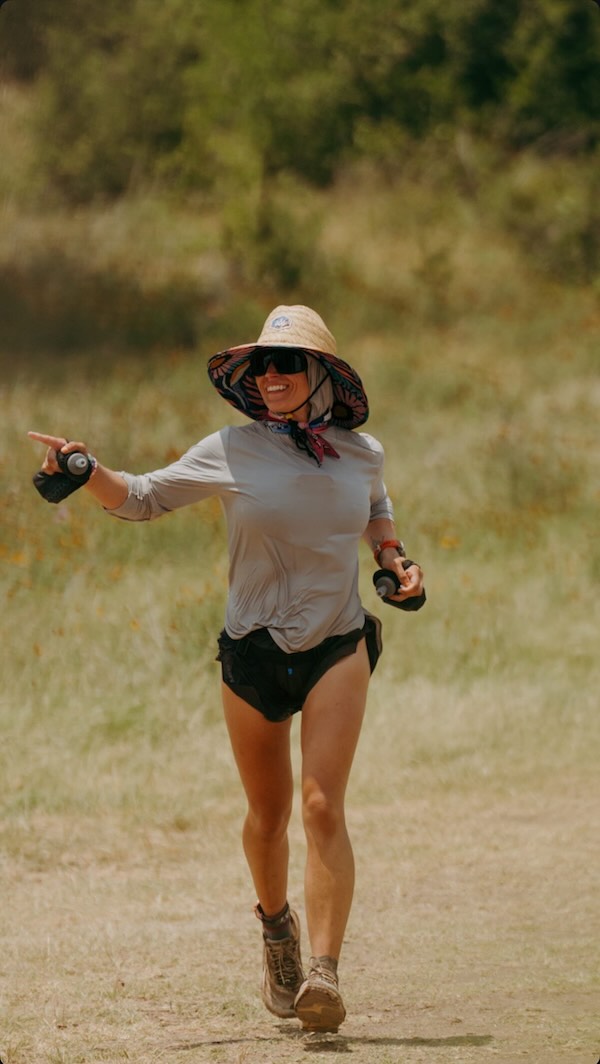
In a backyard ultra you do not have room for error. You hit your paces, you come in, check, check, check, and you are right back out there.
Alyssa McClellan, last woman standing at the BPN Go One More Backyard Ultra 2025.
What a backyard ultra training plan has to build
Five things, in roughly this order of importance:
- Pacing. A loop pace you can repeat when you are tired, bored, and it is the middle of the night. Almost every first-timer runs the early loops too fast because they feel easy.
- Fueling. A routine that puts calories, fluid, and sodium in every single hour, rehearsed enough that you are not making decisions about it at 3am.
- Loop efficiency. What happens in the corral. Where your gear lives, who hands you what, how fast you are back on the line. Minutes here are recovery you get for free.
- Durability. Tolerance for repeated efforts on tired legs. Back-to-back long runs build this. One heroic weekend run does not.
- Going back out again. The trainable habit of standing up and starting when the last thing you want to do is start. This is the one most plans ignore.
Rehearse the hour
The single most useful backyard-specific session is the timed loop. Run roughly four miles starting on the hour, come back, refuel and rest with whatever time is left, and go again when the hour turns.
Two or three loops teach you what your real loop pace is and how long your transition actually takes, which is almost always longer than you think.
Six or more start teaching you the thing the race is really about: the restart.
Run some of them at night. Set an alarm for 2am, get up, and go out for your four miles in the dark. This will do very little for your tolerance of sleep deprivation, and you should be honest with yourself about that. What it builds is the willingness to get up.
By race night, starting in the dark is something you have already done a dozen times.
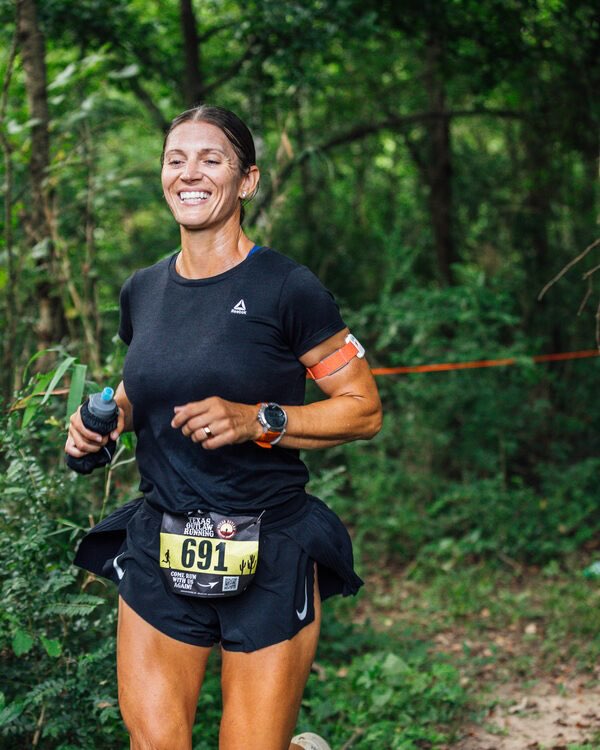
What it ended up doing was growing my mental strength. How bad do you want this?
Alyssa on her own 2am loops.
Fueling is a training session
Nothing ends more backyard ultras than a stomach that stops accepting food.
Train your gut the way you train your legs. Eat on the move in training, at the pace and in the heat you expect on race day, until you know what you can take at hour twenty. Try eating a full meal and heading straight out to run, so a heavy stomach at pace is a familiar feeling.
Then take the thinking out of it.
Carry a gel and salt on every loop, even the ones where you are sure you will not need them. If you go wobbly two miles out, you want to reach into your pocket instead of working out what is wrong.
The same logic runs through crewing a backyard ultra: strip out the decisions before the race starts.
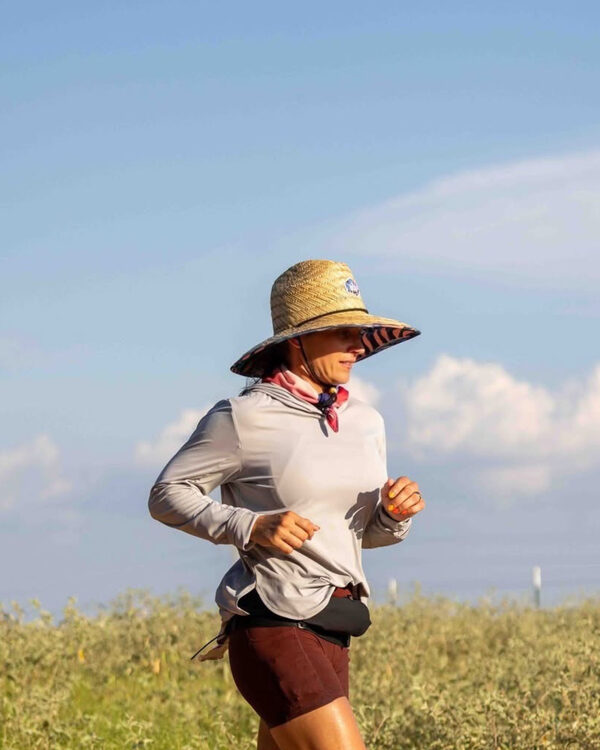
You want to use your brain as little as possible.
Alyssa on race-day decision making.
Who wrote the plan
Alyssa McClellan
Alyssa is a Texas ultrarunner, a mother of four, and the coach behind Run Far Not Fast. She came to trail running in 2023 and has spent the years since collecting podiums at distances most runners take a decade to reach.
Top-three finishes across five 50Ks, a 50-miler, a 100K, ten 100-milers, a 125, and a nine-hour timed race. Every 100-miler under 24 hours.
- BPN Go One More Backyard Ultra. Last woman standing, 2025. Raced again in 2026.
- Big Tex Backyard Ultra. Last female standing and second overall.
- Habanero 100. First female, both times she has run it. Texas, August, noon start, deliberately scheduled for the hottest day of the month.
- Sedona Canyons 125, Mingus Traverse 80, Travellers 100. Third at Mingus.
She is also candid about the two DNFs, which she treats as the most useful races she has run. One was a 40-miler in the Texas Hill Country where she went out too fast and ignored her nutrition. The other was mile 75 of a freezing race in Arkansas.
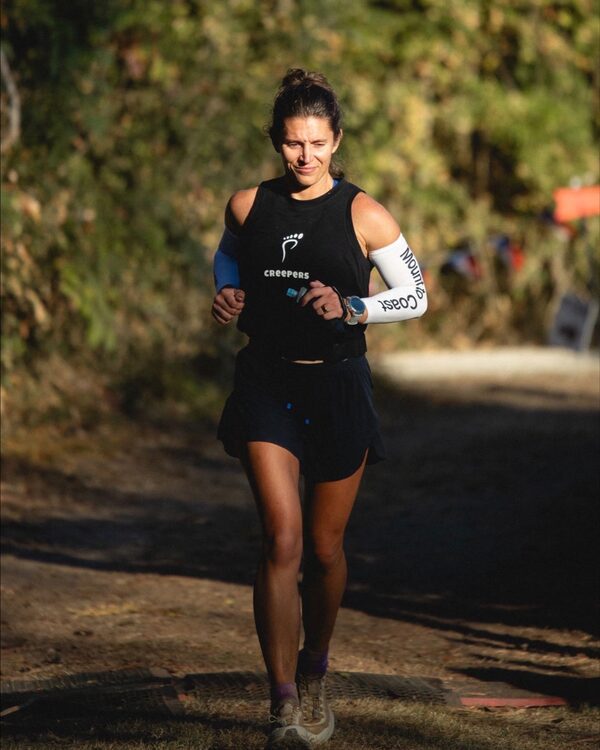
Discipline, not motivation, carried me through when things got tough.
2-week last man standing training
We partnered with Alyssa to build this for backyards.run readers who have a first backyard on the calendar. It is a two-week block of race-specific work: pacing, fueling, loop efficiency, durability, and the art of going back out again.
It is aimed at runners who have some ultra base and a last one standing race on the calendar, or who want to see what backyard-specific training actually looks like before committing to a full block.
Common questions
How long should I train for a backyard ultra?
With an ultra base already in place, 12 to 16 weeks is a common block for a first backyard. Coming from the marathon or shorter, build general endurance for a few months first, then layer on the backyard-specific work.
How many miles a week do I need?
There is no magic number. Backyard runners tend to hold high, steady, easy volume year round. The format rewards time on feet and the ability to recover inside an hour more than it rewards a big peak week.
Do I need to train sleep deprivation?
You cannot really train it, and trying to is a good way to arrive tired. What night sessions do give you is familiarity: running in the dark and starting at 2am stop being novel. Treat them as mental rehearsal.
Should I train on the race loop?
If you can get to it, yes. Knowing where the climbs are lets you build pacing landmarks: pick a sign or a turn and know what minute you should reach it. Then you always know whether you are on schedule without doing any arithmetic.
What pace should I run my loops at?
Slower than feels right. Most runners want a 50-minute loop, leaving ten minutes in the corral, though that shrinks deep into a race. Our pacing strategy analysis looks at what elite runners actually held across six races.
Photos courtesy of Alyssa McClellan.